ES
Transcripción en español
Presentador
Bueno, nos vamos a Xochicalco. Estuvimos ahí hace unos días, y el 14 de mayo y los primeros veinte días de mayo son significativos para las culturas prehispánicas. Geraldine Patrick tiene los detalles en la siguiente historia.
Narrador
Ella es Geraldine Patrick Encina, arqueoastrónoma desde hace más de veinte años.
Geraldine Patrick
Empecé a partir de observar cómo, en el pueblo otomiano, es tan importante Venus como la Luna, como el Sol.
Narrador
Al estudiar códices mayas y otomís retomados por mexicas, encontró que refieren cómo Venus y la Luna emergen a la creación e indican que este proceso se complementó 5,128 años después, en un 3 de mayo del año 2013, y no en diciembre del 2012, como se nos dijo. Esa fecha resultó de una interpretación distinta a las culturas de Mesoamérica.
Geraldine Patrick
Interpretadores españoles que llegaron y, con su sistema de cuenta lineal, obligaron a acortar.
Narrador
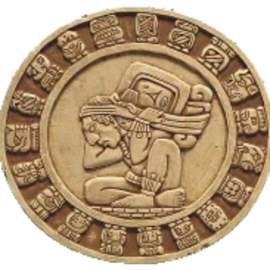
Los glifos de la explanada de Xochicalco refieren una fecha.
Geraldine Patrick
Aquí podemos presenciar y leer una fecha que ahora podríamos decir: la plaza del 14 de mayo del 747. Quién sabe si además fue una fecha fundacional.
Narrador
Las culturas prehispánicas observaron que los primeros veinte días de mayo el Sol alcanza la altura máxima.
Geraldine Patrick
Abarca desde el 30 de abril, que es cuando hay un paso cenital sobre Izapa, en Chiapas, y también sobre Copán, en Honduras.
Narrador
En ese entonces, las culturas aún distantes tenían conexión exacta, exacta en cuanto a la medida del tiempo.
Narrador
Xochicalco, lugar estratégico para descifrar el discurso celeste. La Pirámide de la Serpiente Emplumada alude a las observaciones que desde aquí se hicieron del cielo.
Geraldine Patrick
Los astrónomos de todas las regiones de México confluían aquí, y no por un ratito; probablemente aquí se formaban.
Narrador
Aportaciones de una arqueoastrónoma en constante investigación. Con imágenes de Raúl Mejía y Cristian Meléndez. Once Noticias, Miguel de la Cruz.
EN
English translation
Anchor
Well, we are going to Xochicalco. We were there a few days ago, and May 14 and the first twenty days of May are significant for pre-Hispanic cultures. Geraldine Patrick has the details in the following story.
Narrator
She is Geraldine Patrick Encina, an archaeoastronomer for more than twenty years.
Geraldine Patrick
I began by observing how, among the Otomian peoples, Venus is as important as the Moon and the Sun.
Narrator
While studying Maya and Otomí codices later adopted by the Mexica, she found that they describe Venus and the Moon emerging into creation and indicate that this process was completed 5,128 years later, on May 3, 2013—not in December 2012, as we had been told. That date resulted from an interpretation different from that of Mesoamerican cultures.
Geraldine Patrick
Spanish interpreters arrived and, with their linear counting system, forced the count to be shortened.
Narrator
The glyphs on the Xochicalco plaza refer to a date.
Geraldine Patrick
Here we can witness and read a date that we could now call the plaza of May 14, 747. Who knows whether it was also a founding date?
Narrator
Pre-Hispanic cultures observed that during the first twenty days of May, the Sun reaches its greatest height.
Geraldine Patrick
It spans from April 30, when the Sun passes through the zenith over Izapa in Chiapas and also over Copán in Honduras.
Narrator
At that time, even distant cultures had an exact connection—exact in their measurement of time.
Narrator
Xochicalco, a strategic place for deciphering the celestial discourse. The Pyramid of the Feathered Serpent refers to the observations of the sky made from here.
Geraldine Patrick
Astronomers from every region of Mexico gathered here—and not just briefly. They were probably trained here.
Narrator
Contributions from an archaeoastronomer engaged in constant research. Images by Raúl Mejía and Cristian Meléndez. Once Noticias, Miguel de la Cruz.